Shipped—created scalable AI conversation playbooks that recognized intent, guided conversations, and connected prospects to the right next step.
Overview
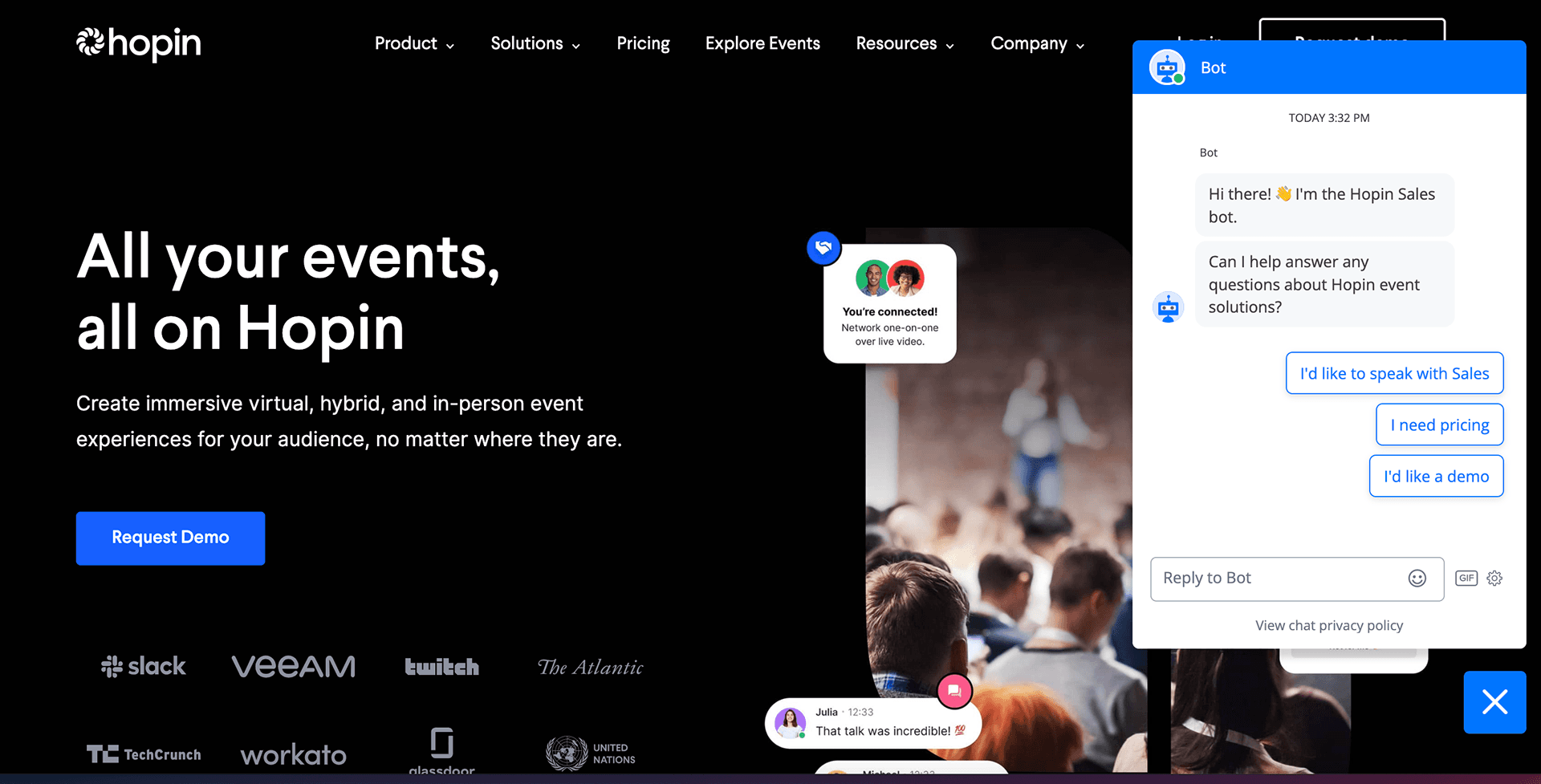
This is a case study of one of my customers for whom I built and implemented a conversational AI chatbot. Hopin purchased Drift’s Conversational AI as part of its approximately six-figure contract to launch a chatbot on its website. Because the team was new to AI chatbots and wanted to learn more about site-visitor goals, they began on the page receiving the highest share of traffic.
Goal: Build an informative chatbot that guides first-time buyers to the right resources, qualifies high-intent leads, and deflects low-intent questions to support.
Client: Hopin, an all-in-one events management platform
My role: Conversation Designer
The Problem
Hopin’s decision-tree chatbots worked effectively for audiences arriving from paid ads and targeted campaign pages. They performed poorly on the homepage, however, where visitors arrived at many different stages of the buying journey. Like an IVR, the scripted paths did not allow visitors to interact on their own terms. Too many qualified leads dropped off, while too many unqualified leads reached sales.
How Conversational AI Solves the Problem
Conversational AI lets visitors communicate using free text. The bot can infer intent from open-text conversations, route high-intent leads to assigned sales representatives, and disqualify or deflect low-intent requests to support.

Discovery Research
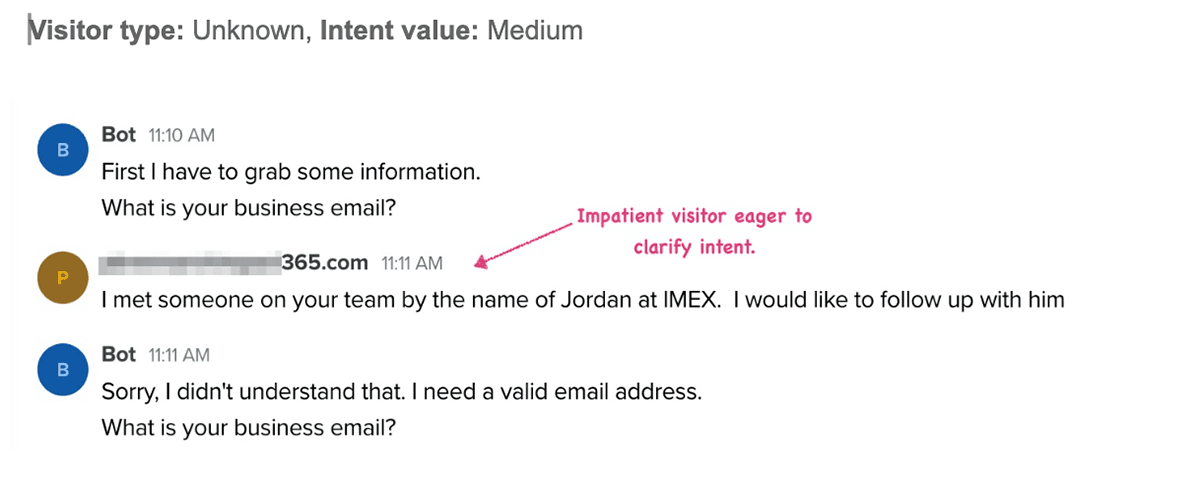
My discovery research began by identifying gaps in the conversations Hopin visitors were having with human agents after clicking through the existing decision-tree chatbot options. I reviewed high-, medium-, and low-intent examples to locate misunderstood questions, unnecessary handoffs, invalid data loops, and missed qualification opportunities.

The Conversational AI Framework
I structured the experience around audience identification and targeting, engagement, understanding, and recommendation. A greeting provided the hook, a classifier grouped intent into clusters, and the dialogue manager navigated visitor motivations before routing them to Sales, Marketing, or Support outcomes.

Timeline
The work progressed from AI kickoff in week one, analysis in weeks two through four, training and building in weeks four through ten, testing and launch in weeks ten through fourteen, iteration and optimization in weeks fourteen through sixteen, and ongoing scale from week sixteen onward.

The Build — Default Paths & Custom Experiences
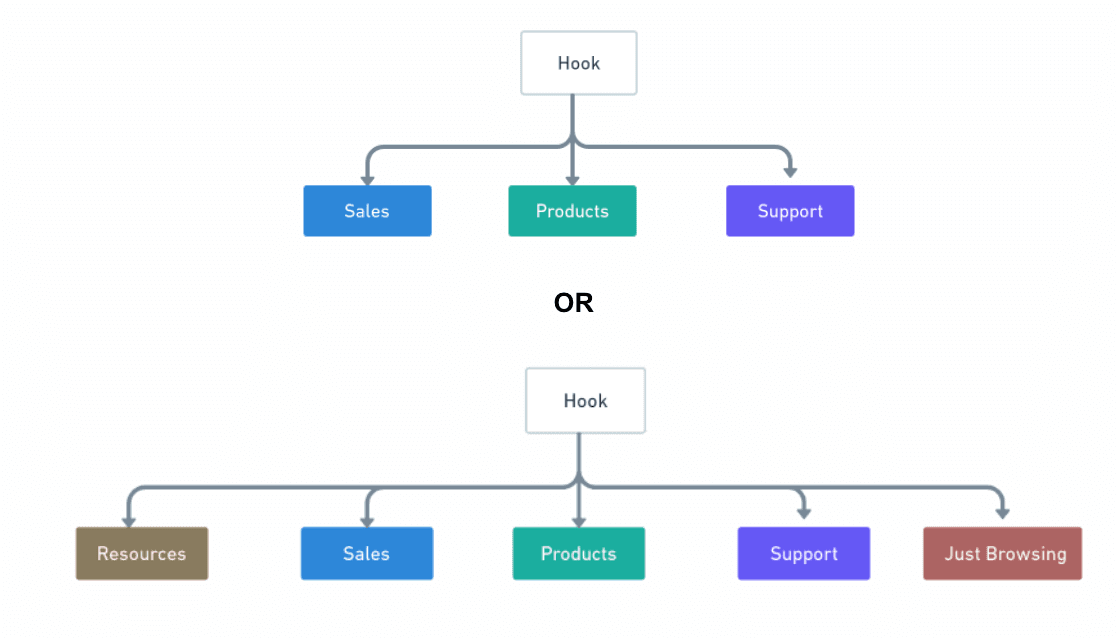
I designed a default hook that could route visitors toward Sales, Products, Support, Resources, or a Just Browsing path. Custom product experiences combined relevant information, calls to action, qualifying questions, human handoff, and meeting-booking flows.

Testing, Training & Iterating
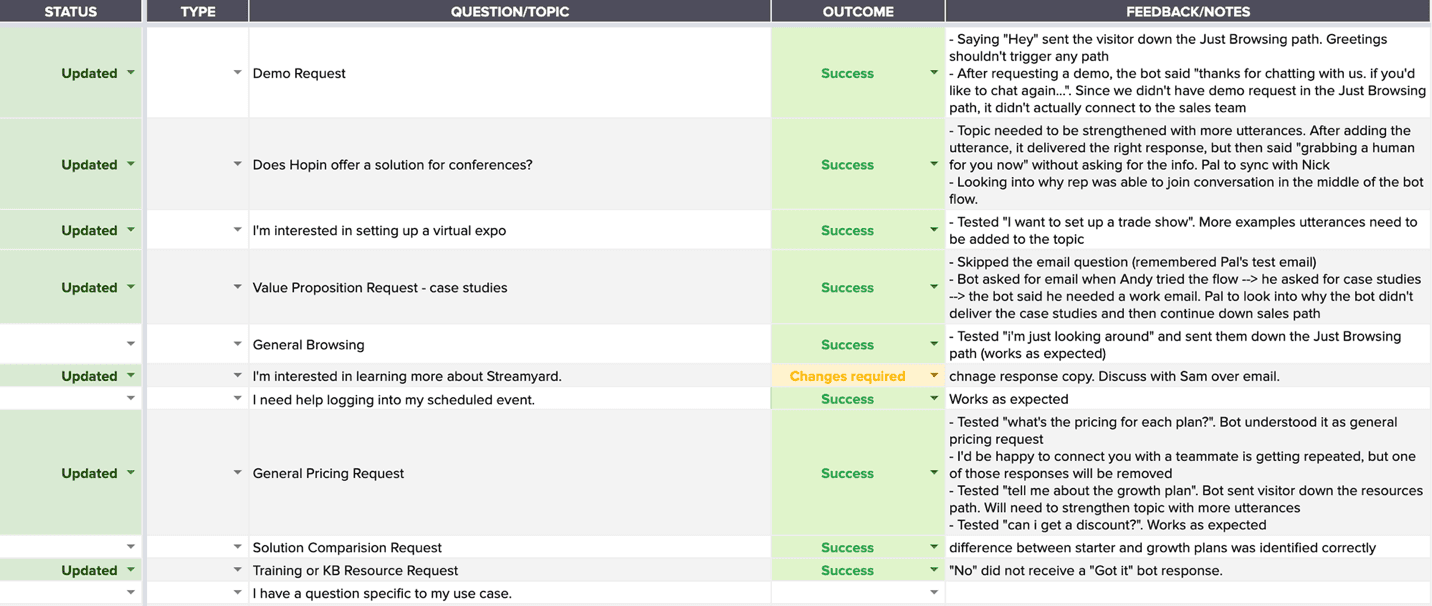
After two to three rounds of internal and customer testing, I launched Hopin’s chatbot on February 15, 2022. I continued training new topics and strengthening existing ones by reviewing conversation logs and monitoring drop-offs, engagement, email captures, meetings booked, and topic usage.


Results
The conversational AI chatbot influenced a $2M pipeline within three months of launch. Hopin renewed its Drift contract for another year. Email captures increased by 5.3%, and meetings booked increased by 1.9%.
